
Home
Product
Optical Window
Infrared Optical Elements
Spheric lens
Aspheric Lens
Optical dome
Diffraction Gratings
Optical prism
Optical filter
Optical Mirror
Cylindrical Lens
Custom&OEM
Optical Custom Design
Optical Thin Film Coating
Custom Service
Company
Company Profile
Factory Tour
Quality Control
Company Culture
Resources
Blog
Exhibitions
Videos
Download
Contact Us
Contact
Online Message
Knowledge
07-12
Understanding Aspheric Lenses: Enhancements in Optical Performance
Aspheric lenses are a critical component in the realm of optical instruments, providing significant improvements in image quality and overall performance. Unlike traditional spherical lenses, which are shaped like part of a sphere, aspheric lenses have a more complex surface profile that varies along the radius. This unique design allows them to focus light more effectively, minimizing optical abe
07-11
Understanding the Cost Benefits of Using Ball Lenses in Optics: A Comprehensive Guide
Understanding the Cost Benefits of Using Ball Lenses in Optics Table of Contents 1. Introduction to Ball Lenses in Optics 2. What Are Ball Lenses? 3. Advantages of Using Ball Lenses 3.1 Cost-Effectiveness 3.2 Performance Improvements 3.3 Versatility in Applications 4. Applications of Ball Lenses 4.1 Use in
07-10
Exploring the Benefits and Applications of Zinc Sulfide Windows in Optical Instruments
Zinc sulfide (ZnS) is a compound that has garnered attention in the realm of optics due to its excellent transmission properties in the infrared region, particularly between 8 to 12 micrometers. This makes it an ideal choice for a variety of applications, including thermal imaging, laser systems, and other optical instruments. With its relatively high refractive index and low absorption rates, zin
07-09
The Critical Link Between Optical Window Thickness and Performance: Unveiling the Science
The Critical Link Between Optical Window Thickness and Performance Table of Contents 1. Introduction to Optical Windows 2. Understanding Optical Properties 3. The Impact of Optical Window Thickness 4. Selecting the Right Materials for Optical Windows 5. Evaluating Optical Performance Metrics 6. Real-World Applications of Optical Windows 7. Key Design Considerations for Optical Windo
07-08
Understanding Plano Convex Cylindrical Lenses: Applications and Benefits
Plano convex cylindrical lenses are specialized optical components widely used in various applications, particularly in the field of optical instruments and devices. These lenses are distinguished by their unique design, featuring one flat (plano) surface and one convex cylindrical surface. This configuration allows them to manipulate light in a specific manner, making them invaluable in numerous
07-07
Crafting Custom Optical Filters for Specialized Instruments: A Comprehensive Guide
Crafting Custom Optical Filters for Specialized Instruments In the ever-evolving landscape of optical technology, the demand for precision and customization is paramount. **Custom optical filters** play a critical role in enhancing the functionality of specialized instruments, from scientific research to industrial applications. In this comprehensive guide, we will explore the process of crafting
07-06
Understanding Optical Prisms: Key Concepts and Applications
Optical prisms are essential components in a wide range of optical instruments and applications. They are transparent solids with flat, polished surfaces that refract light, enabling various manipulations of light paths. The fundamental principle behind optical prisms is the refraction of light, defined as the bending of light as it passes from one medium to another. This bending occurs due to a c
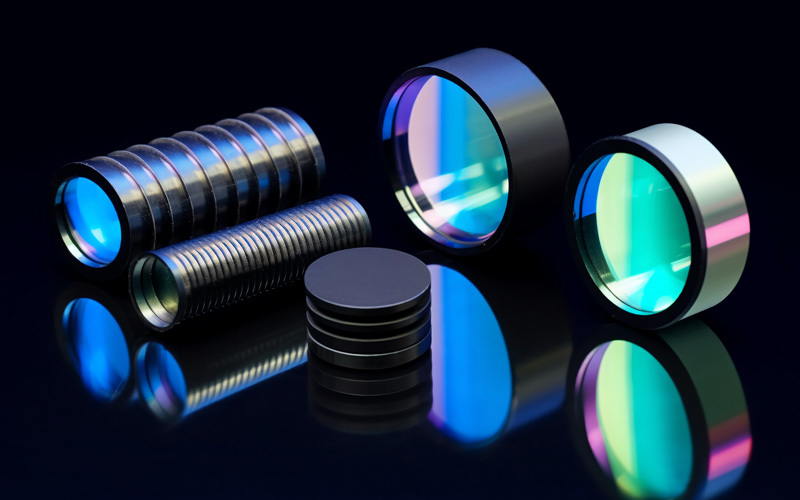
Long Wave Infrared Optics: High-Performance Optical Solutions for Thermal Imaging and Infrared Applications
Long Wave Infrared Optics are precision optical components designed for the 8–14 μm wavelength range, widely used in thermal imaging, night vision, security surveillance, industrial inspection, and scientific research