
-
-
-
-
Resources

-
Contact Us

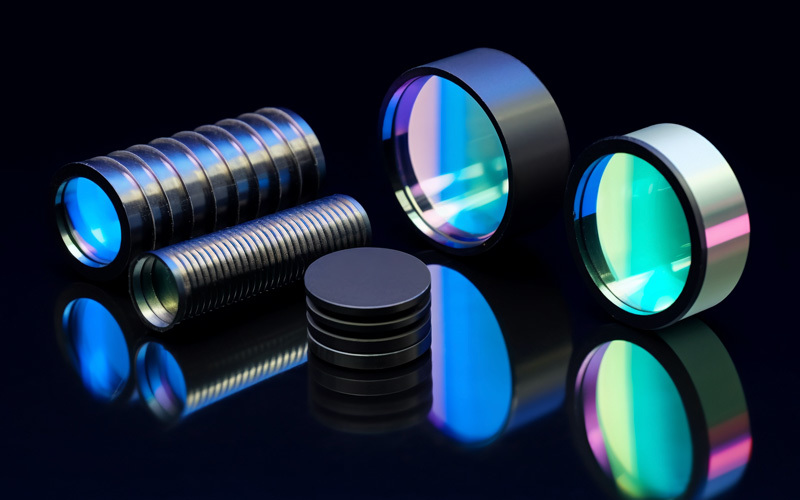



Various Types of Simulators
Key words:
Classification:
Optical communication products
WhatsApp:
Technical Specifications.The following is just an example. For more lens parameters, please contact us.
Atmospheric Simulation Systems
Hot-Air Convection Atmospheric Turbulence Simulator
Product Functions:
The simulator reproduces the primary effects of laser beam propagation through the Earth's atmosphere, including intensity scintillation, angle-of-arrival fluctuations, and beam wander. Input parameters are configurable, allowing users to set atmospheric coherence length and other turbulence-related parameters. The output results can be monitored and compared with theoretical values. The system is widely used for functional verification and performance testing of various laser systems operating in atmospheric channels.
System Components and Specifications:
1.Atmospheric Turbulence Simulation Device
(1) Clear aperture: Customizable
(2) Turbulence simulator length: ≥ 600 mm
(3) Airflow speed: ≤ 5 m/s (adjustable)
(4) Atmospheric coherence length (r₀): 1 cm–20 cm @ 550 nm (adjustable)
(5) Control: Touchscreen control with Ethernet communication interface
(6) Turbulence chamber sealed with optical windows
(7) Power supply: 220 VAC (customizable)
2.Atmospheric Aerosol Simulation Device
(1) Clear aperture: Customizable
(2) Aerosol simulator length: ≥ 600 mm
(3) Aerosol type: PAO, etc. (customizable)
(4) Adaptive aerosol concentration control
(5) Control: Touchscreen control with Ethernet communication interface
(6) Power supply: 220 VAC (customizable)
3.Atmospheric Attenuation Simulation Device
(1) Clear aperture: Customizable
(2) Length: ≥ 600 mm
(3) Transmittance: 40%–100% (customizable)
(4) Control: Touchscreen control with Ethernet communication interface
(5) Power supply: 220 VAC (customizable)
Liquid Crystal Atmospheric Turbulence Simulator
Main Functions:
This product provides rapid and quantitative simulation of atmospheric turbulence effects on optical beam propagation. It can simulate the effects caused by atmospheric turbulence, including intensity scintillation (under finite-aperture receiving conditions), angle-of-arrival fluctuations, beam spreading, beam wander, optical phase distortion, and beam coherence degradation.
Input parameters are configurable, allowing users to set transmission distance, refractive-index structure constant (Cn²), atmospheric coherence length (r₀), and other atmospheric parameters. Output results can be monitored in real time. The simulator is widely used for functional verification and performance testing of various laser systems operating in atmospheric environments.
Key Advantages:
- High turbulence generation accuracy
- Excellent repeatability
- Fast setup and rapid deployment
Applications:
- Free-space optical communication system testing
- Laser ranging and LiDAR system testing
- Other laser systems operating in atmospheric environments
Main Technical Specifications:
- Atmospheric coherence length: 1–25 cm
- Phase simulation accuracy: λ/8
- Coherence length simulation RMS error:
0.20 cm @ r₀ = 1 cm
0.64 cm @ r₀ = 3 cm
1.11 cm @ r₀ = 5 cm - Coherence length simulation PV error:
0.67 cm @ r₀ = 1 cm
1.14 cm @ r₀ = 3 cm
2.00 cm @ r₀ = 5 cm
Software Functions:
Three operating modes are available:
- Direct input of atmospheric coherence length (r₀). The turbulence phase screen is generated in real time.
- Turbulence simulation using a phase screen generated by Zernike polynomials.
- Input atmospheric environmental parameters. The software automatically calculates the atmospheric coherence length (r₀) and performs turbulence simulation using the method described in Mode 1.
Previous Page
Related Products


ONLINE MESSAGE
Leave your phone number and we will contact you as soon as possible
* Note: Please be sure to fill in the information accurately and keep the communication unblocked. We will get in touch with you as soon as possible.
Tel / WhatsApp
Technical Support
Address
No.617 Hongwan International, west of Shenzhen Street, south of Pudong Road, Economic and Technological Development Zone
All rights reserved©2025 China Star Optics Technology Co., Ltd.