
Home
Product
Optical Window
Infrared Optical Elements
Spheric lens
Aspheric Lens
Optical dome
Diffraction Gratings
Optical prism
Optical filter
Optical Mirror
Cylindrical Lens
Optical communication products
Custom&OEM
Optical Custom Design
Optical Thin Film Coating
Custom Service
Company
Company Profile
Factory Tour
Quality Control
Company Culture
Resources
Blog
Exhibitions
Videos
Download
Contact Us
Contact
Online Message
Knowledge
09-09
How Optical Filters Contribute to Color Correction in Instruments
How Optical Filters Contribute to Color Correction in Instruments Table of Contents 1. Understanding Optical Filters 2. The Science Behind Color Perception 3. Types of Optical Filters 3.1 Neutral Density Filters 3.2 Color Filters 3.3 Polarizing Filters 4. The Role of Optical Filters in Color Correction 4.1 Enhancing Image Quality 4.2 Balancing Color Temperature 5. Applications of Optical Filters i
09-08
Understanding Optical Prisms: Essential Insights for Professionals in Optical Instruments
Optical prisms are transparent optical elements with flat, polished surfaces that refract light. The bending of light occurs as it passes through the prism due to differences in the refractive indices of the prism material compared to air. This refraction phenomenon is key to various applications in optical instruments, enhancing their functionality and performance. There are several types of opti
09-07
Comprehensive Insights into the Manufacturing Costs of Optical Domes
Understanding the Manufacturing Costs Associated with Optical Domes Table of Contents Introduction to Optical Domes The Importance of Optical Domes in Various Industries Key Factors Influencing Manufacturing Costs Material Selection and Its Impact Design Complexity and CNC Machining Production Techniques: From Casting to Polishing
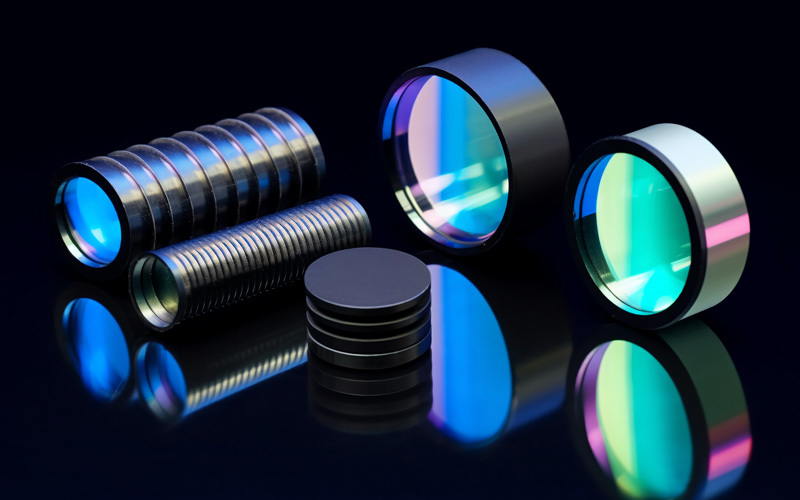
Optical Lens for Precision Imaging and Advanced Optical Applications
Optical lens provides precise light control for imaging, lasers, instruments, research, and industrial systems.
09-06
Understanding the Benefits and Applications of Aspheric Lenses in Optical Instruments
Aspheric lenses are designed with a non-spherical surface profile, distinguishing them from traditional spherical lenses. This unique shape allows for the correction of optical aberrations, such as spherical aberration, which can cause blurriness and distortion in images. By utilizing aspheric lenses, manufacturers can produce optical instruments that deliver sharper and clearer images, making the
09-05
The Benefits of Ball Lenses in Industrial Optical Applications
The Benefits of Ball Lenses in Industrial Optical Applications Introduction to Ball Lenses in Industry In the realm of industrial optics, the role of precision components is paramount. Ball lenses, with their unique spherical structure, have emerged as a fundamental element in various optical applications. These lenses are designed to focus light efficiently, offering significant advantages over t
09-04
Unlocking the Potential of Zinc Sulfide Windows in Optical Instruments
Zinc sulfide (ZnS) is a wide-bandgap semiconductor that has garnered significant attention in the optical industry, especially for the manufacture of optical windows. The optical properties of zinc sulfide, such as high transmittance in the infrared region, make it an excellent choice for various applications, including thermal imaging, laser systems, and spectroscopy. One of the most notable char
09-03
How to Optimize Your Optical Window Setup for Better Results
How to Optimize Your Optical Window Setup for Better Results Optical windows play a critical role in various applications, from scientific research to industrial processes. Optimizing your optical window setup is essential for maximizing performance and ensuring the best possible outcomes in your projects. In this guide, we will explore effective strategies and best practices to enhance your optic